
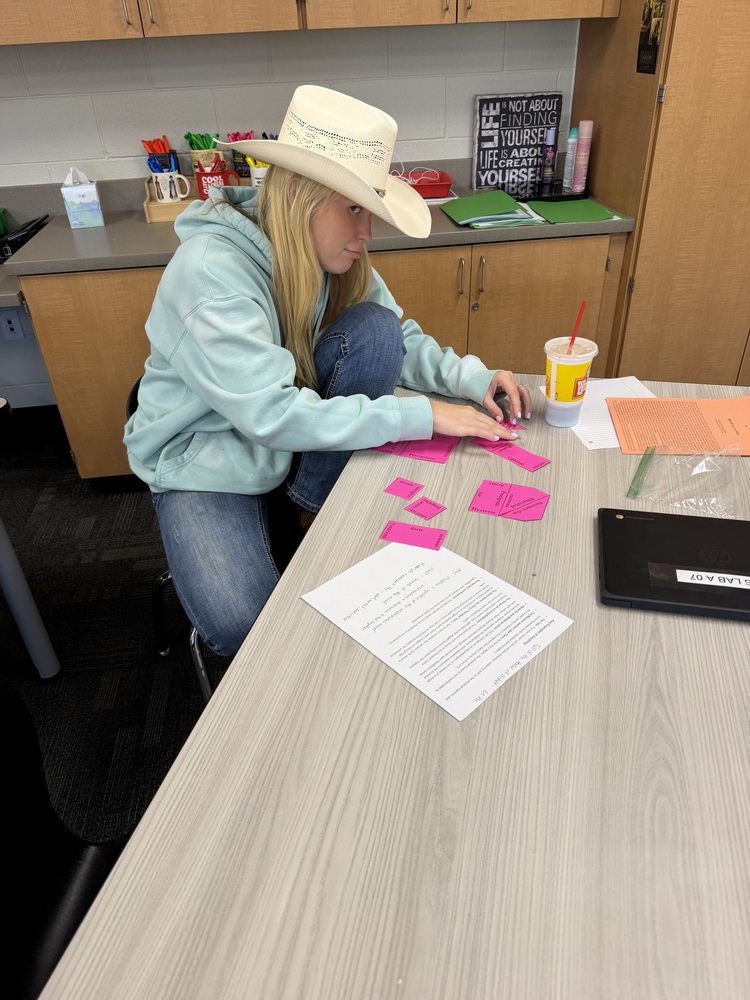
When high school students start reading classic literature like Edgar Allan Poe’s The Fall of the House of Usher, they often hit a wall of complex, 19th-century vocabulary. Words like annihilate, equivocal, pessimistic, and tarn can easily turn a masterpiece into an exercise in deciphering old text.
However, English teacher Laurice Critchlow recently transformed what could have been a routine vocabulary assignment into an immersive learning experience. Designing a custom, interactive vocabulary puzzle tailored to The Fall of the House of Usher, Critchlow turned word study into a hands-on challenge that kept her students actively engaged and collaborating.
Instead of relying on standard flashcards or memorization drills, Critchlow created an interactive puzzle where students worked together to solve clues, decode meanings, and contextualize Poe’s language. By turning complex vocabulary into a puzzle-solving game, she created an environment where students were not just passive listeners, but active participants in their learning.
Critchlow serves as an inspiring example of how thoughtful, creative instruction can reshape the classroom experience. By replacing traditional busywork with engaging, interactive challenges, teachers like her show that high school academics can be both rigorous and genuinely enjoyable.
With innovative tools and a passion for student engagement, Ms. Critchlow continues to prove that a little creativity can turn even Gothic horror literature into fun, meaningful learning.